How Timber Is Exported from Africa
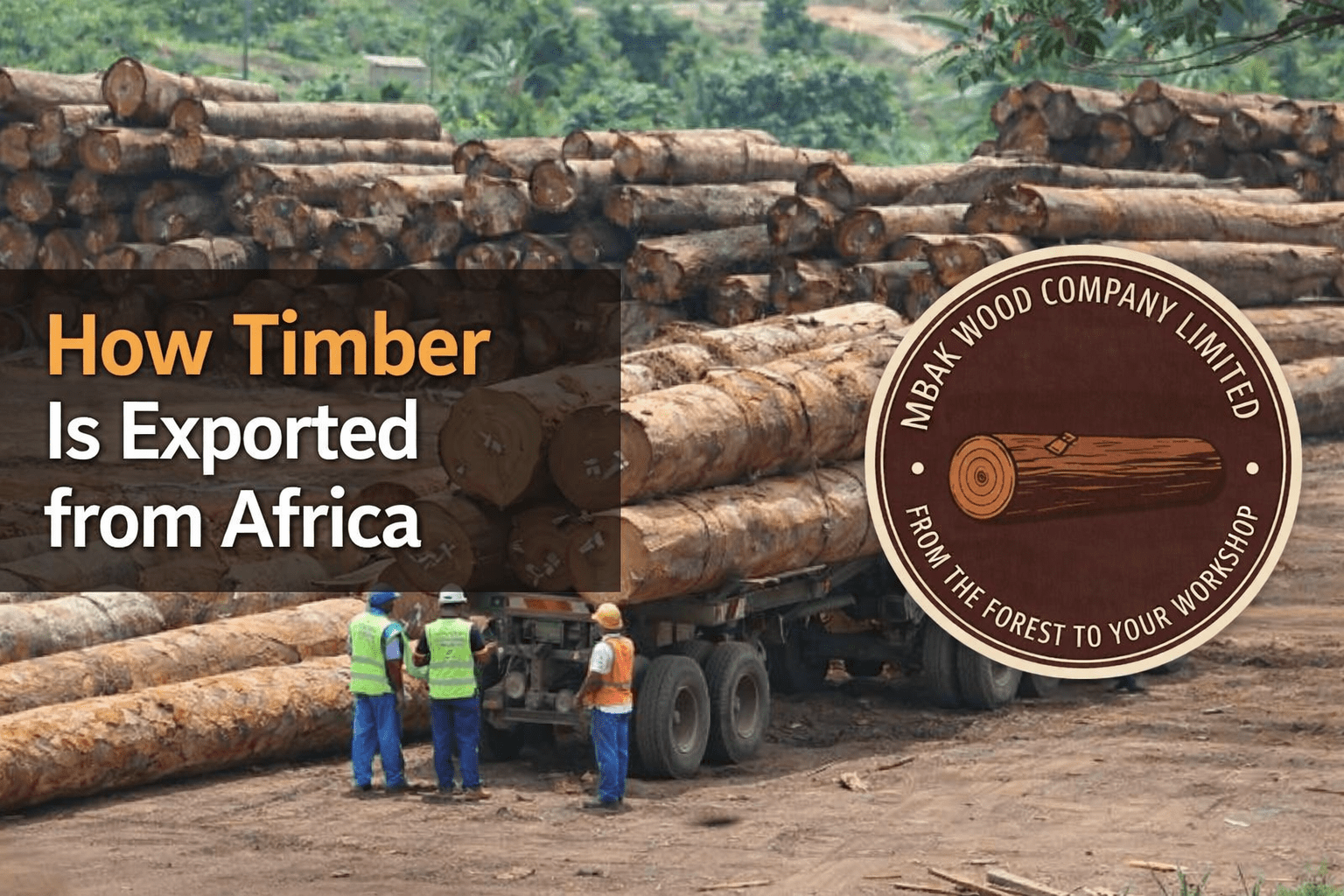
Overview of the African Timber Export Process
Understanding how timber is exported from Africa helps buyers avoid delays, fraud, and rejected shipments. The export process follows strict legal, environmental, and quality standards. Work with a reliable African timber export supplier to ensure smooth transactions and legal compliance.
Step 1: Legal Timber Harvesting
Timber export starts with legally licensed harvesting. Trees are selected based on government-approved forest management plans and sustainability rules.
- Government logging permits
- Species and volume control
- Sustainable forest management
Step 2: Processing & Sawmilling
Logs are transported to sawmills where they are processed into sawn timber, planks, beams, or slabs according to buyer specifications.
Step 3: Drying & Quality Control
Timber is air-dried or kiln-dried to reduce moisture content. Quality checks ensure correct dimensions, grading, and absence of major defects.
Step 4: Export Documentation
- Export permit & forestry certificate
- Phytosanitary certificate
- Commercial invoice & packing list
- Certificate of origin
Step 5: Inspection & Compliance
Independent inspections (SGS, BV, or customs agents) verify quality, quantity, and legality before shipment approval.
Step 6: Container Loading & Shipping
Timber is containerized or break-bulk loaded and shipped through major African ports to Europe, Asia, the Middle East, and beyond.
Export African Timber with Confidence
MbakWood handles sourcing, processing, inspection, and export documentation.
Request a QuoteAfrican Timber Export in Action
Read Also:




